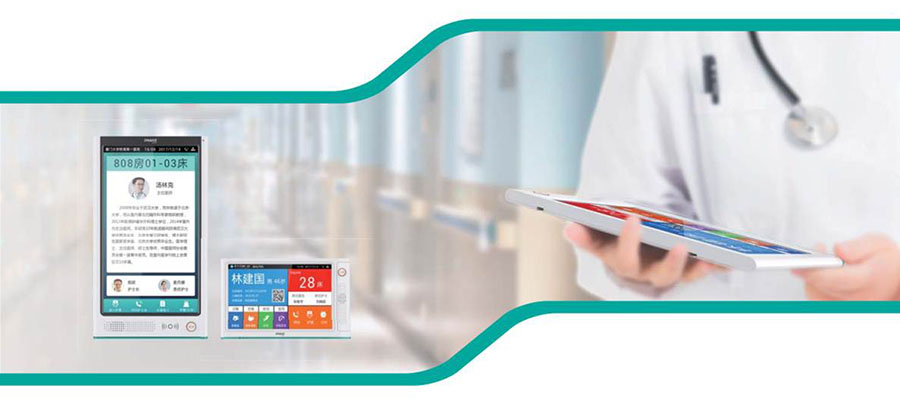
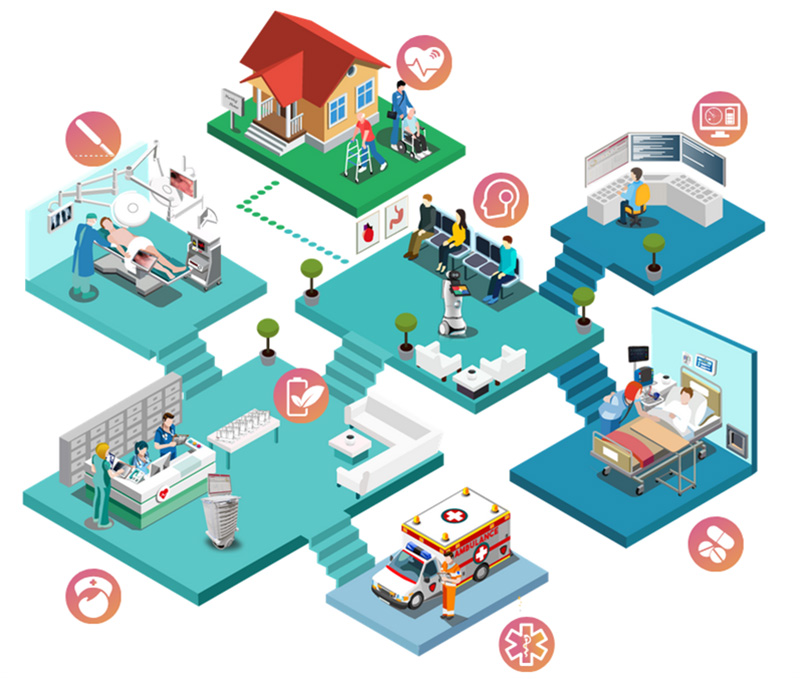
As an integral part of patient treatment and care, nurse call systems can be used in hospitals, clinics, care homes or assisted-living centers. With an advanced nurse call system in place, hospitals can improve patient experience and satisfaction, enhance communication among patients, clinicians and caregivers, provide timely response, and organize the clinical workflows.
IP-based nurse call systems leverage session initiation protocol (SIP) and voice over Internet protocol (VoIP) technologies for audio communications and allow the patients to get the attention of a nurse whenever needed via smart terminals, such as bedside terminal, nurse terminal and smartphone, etc. In addition, real-time communication and data capture help to improve call system effectiveness and monitor the activities of both healthcare workers and patients.
What does an IP nurse call system consist of?
1. Call & Intercom:
The patient can call nurse terminal by one button of bedside terminal to realize duplex communication.
2.Video Intercom:
HD video full duplex intercom can be made between different nurse stations as well as nurse station and doctor office.
3.Call for Assistance:
Bedside terminal supports one-button call to nurse station for help.
4.Dressing Change Reminder:
It supports one-button call to nurse station to remind of dressing change.
5.Information Display:
Basic information of the patient is updated and displayed in bedside terminal, etc. in real time for the medical staff to check.
6.Information Query:
The patient can query about hospital costs and doctor’s advices, etc. through bedside terminal.
7.Nursing Location:
When the nurse enters the ward to do nursing work, the terminal will display the location synchronously.
8.Broadcast:
It supports whole area or sub-area broadcasting, announcement and scheduled broadcasting to the ward areas.
9.LED Display:
When there is a call from the patient, corridor LED display will show call information in scrolling way. If there is no call, the LED display always shows the time.
10.Call Forward:
It supports forwarding the call to other nurse terminals.
11.Ward Area Door Unlocking:
It can control ward area door lock and realize access control by video intercom with the visitor.
12.Online Detection:
It can detect the online status of the devices in real time.
1. Real-time Communication
Timely response is the key to high quality patient treatment and care. This system will alert nursing regarding patient needs and emergent situation. Once there is a call from the patient, nurses can respond quickly to patient requests, which ensure that their processes are as efficient as possible.
2. Full Automation
The patient and caregiver will have access to their own call buttons. For patients, this could be a small terminal placed next to the bedside or mounted into the equipment belt. Anytime help is needed, the button would simply have to be pressed to alert the caregiver or nurse. On the caregiver’s side, there is the option to wear the wrist watch or have the alert come through on a display monitor.
3. Strong Compatibility
The system can be integrated with existing data and communication systems to form the perfect solution, offering a common communication infrastructure that can run throughout the hospital. Moreover, it’s compatible with other SIP-based device, such as SIP Phone.
4. High Efficiency
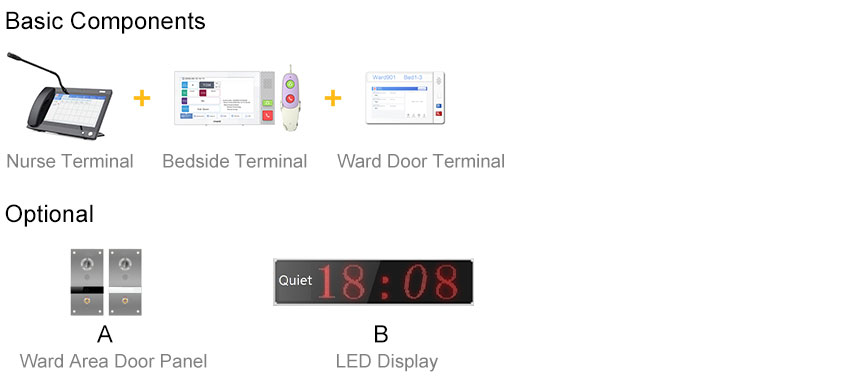
The call can be initiated by patients or staff from any location with a call terminal, such as the patient’s bedside terminal, nurse terminal, ward door terminal or ward area door panel, helping in improvements of patient satisfaction, staff communications and operational efficiencies.